
Project management trends & insights.
Latest product updates
-
Cost overruns: why costs get out of hand
A cost overrun means exceeding the projected cost to complete a project. Often, cost overruns become apparent only after the budget has already been affected, but their causes build up long before that: optimistic estimates, added tasks, delays, and unanticipated work hours. For a project manager, the problem isn’t just spending more than expected. Cost…
Follow Twproject





Choose the category you are interested in:
AgileComparisonConsultingCost managementEngineeringITMarketingPm expertProduct updatesProductionProductivityProject managementResource managementTime managementUsage tips
-
New Twproject Release 7.3.001 – AI interactivity and the introduction of Earned Value Management
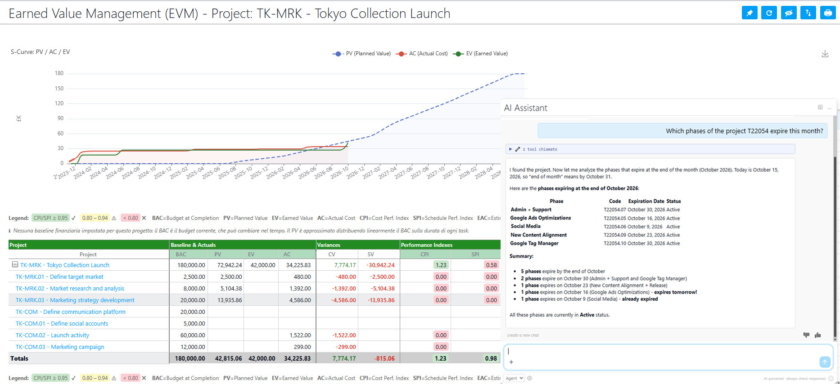
Do you remember the little teaser we ended our article on release 7.2 with? We promised you that the artificial intelligence in Twproject would soon go beyond the support chatbot, going on to interact with your project data. With release 7.3.001, that promise becomes a reality. But that’s not the only major new feature. This…
-
How to produce shareable reports for engineering teams
In an engineering firm, the quality of decisions depends largely on the quality of the information on which they are based: an incomplete, delayed or manually compiled report almost always arrives too late to be of any real use, and those who have to decide whether to slow down a phase, reallocate a resource or…
-

The most available resource is not always the right one: allocating skills to engineering projects
If you work in an engineering team , this situation may sound familiar to you: a resource has some spare time this week → The project manager assigns them to the delayed phase → Two days later, they discover that that phase required a skill which that person does not have → the work has…
-
Punch list: what it is and how to use it in project closure
The punch list is arguably one of the most practical tools in a project manager’s toolbox during the closing phase of a project, when their job is to make sure that everything promised has actually been completed to the highest standards. It is a complete list of discrepancies, unfinished work, or flaws found during the…
-
Balancing workloads in a technical office
Workloads in a technical office are often the ultimate indicator of an engineering company’s health: when they are not distributed thoughtfully, they quickly snowball into project delays, rushed drawings, and superficial reviews—all of which directly impact project quality and safety. In the technical offices of engineering and EPC (Engineering, Procurement, and Construction), this problem becomes…
-

How to coordinate resources in a production company with distributed facilities
Imagine a business project involving the engineering department, production, administration and an overseas branch. The engineering department works standard shifts, production works three shifts, administration works reduced hours on Fridays, and the branch observes different public holidays. How do you calculate actual lead times? How do you know if a resource is actually available when…
-
Capacity planning: is your team ready for another project?
Capacity planning is a key tool for addressing a critical question: How many times have you celebrated landing a new client or getting the green light on a new internal project, only to realize soon that no one knows who will actually work on it? The excitement of the moment gives way to the harsh…
-

Too many departments, too much going on: how to structure complex projects in production companies
In a production company, a complex project is never the responsibility of just one department. Design, procurement, production, logistics, quality: each phase involves different skills, different timelines, and different people in charge. When the structure isn’t clear from the start, the team’s energy is scattered, and problems always seem to arise at the worst possible…
-
Job order management: on-schedule and on-budget
Job order management is the process that helps people working on unique, one-time projects know, at any given moment, whether a job order is on schedule and within budget—not just after completion, when any corrections would happen too late. For a company that lives on projects—such as a plant contractor, a construction site, or an…
-
Project dashboard for production companies: gain visibility into every operational project
In production companies, projects cannot wait. A delayed order, an overloaded employee, a cost that exceeds the budget: in short, any problem that is identified too late costs twice as much, in both time and money. And yet, in many organisations, monitoring is still carried out retrospectively: weekly update meetings, Mixed tools and management systems…
-
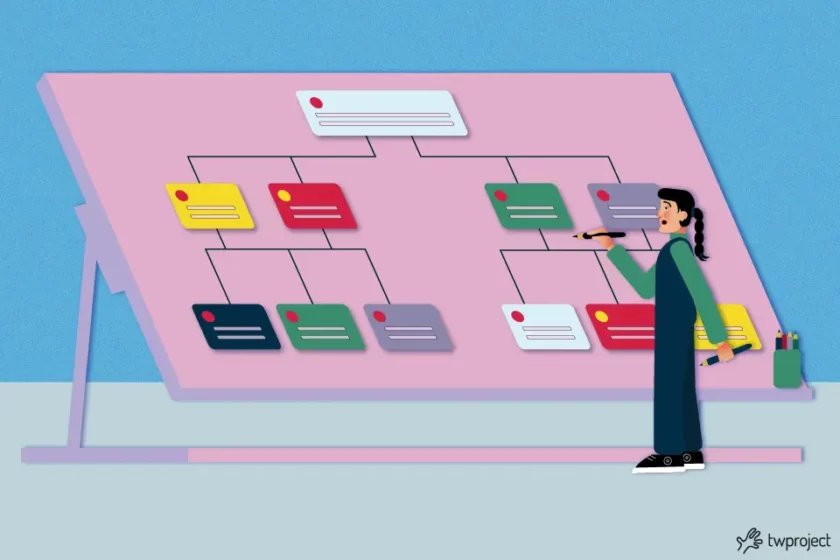
Dependencies between tasks: how to map them and prevent roadblocks
Dependencies between tasks are the invisible thread that ties every project plan together: when they aren’t mapped correctly, a delay in a single task can bring the rest of the work to a halt. For project managers in the manufacturing industry, where a stalled production line literally eats up money every minute, this problem isn’t…
-
Staying within budget: the approach taken by the most efficient production companies
Ask any production manager at a manufacturing company what one of the most frustrating problems is when managing projects, and the answer will almost always be the same: the actual costs only show up too late. It is only when the project has already been completed — or worse, when the client has already received…