
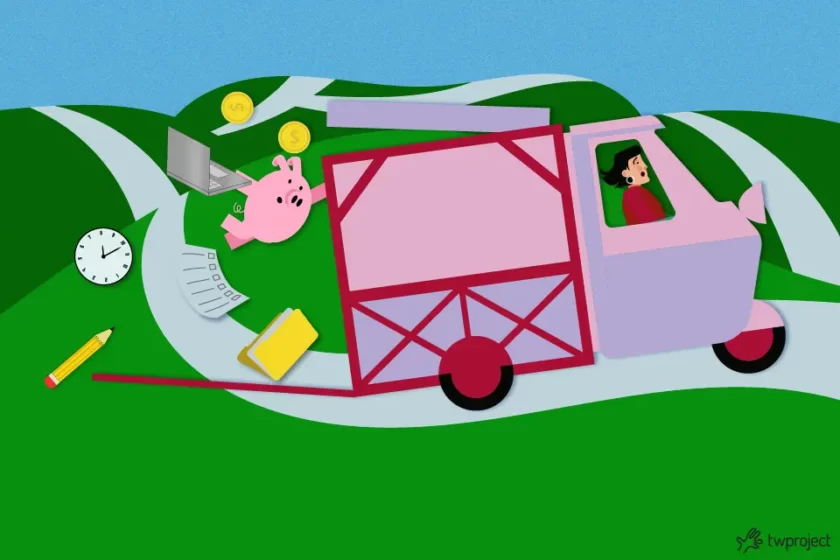
Fragmented IT project management has only one outcome: wasted effort, avoidable delays, and teams that never get the full picture.
Excel spreadsheets in different versions, fragmented chats and emails, and ticketing tools disconnected from the project plan—this is the daily scenario for many departments. Fortunately, this is a solvable problem—with the right approach and the right tools.
In this article, we’ll cover the main factors that cause fragmentation in IT projects and, most importantly, five concrete steps to tackle it.
We’ll share the real-world experience of Gruppo Confezioni Andrea Italia, a manufacturing company with 2,500 employees and eight plants worldwide that faced this exact problem.
CONTENT
Why IT projects become fragmented
Fragmentation doesn’t just happen overnight, but builds up over time. IT teams typically use different tools for each need: bug tracking, communication, project planning, and cost management. Each generates its own data stream, which rarely flows into a shared view.
The most common causes are:
• Lack of a unified reference system for planning and monitoring
• Tools that can’t connect with one another
• Difficulty tracking actual progress compared to initial estimates
• Information spread across emails, chats, documents, and different apps
• Lack of insight into resource utilization and actual costs
The result is a project manager who is constantly in reactive mode, collecting data from multiple sources instead of making decisions based on thorough, up-to-date information.
A real case scenario: Confezioni Andrea Italia Group
Confezioni Andrea Group is an Italian business, boasting over forty years of experience in the automotive, motorcycle, and aviation industries. With 2,500 employees working across eight facilities in Italy, Tunisia, Serbia, Romania, and Moldova, the IT department was managing numerous projects simultaneously —without a centralized system.
Here’s how Alessio Valvano, the Group’s Head of IT, describes the early circumstances:
“Every project was managed independently: no centralized repository, no naming conventions, and often not even the certainty that the project actually existed on paper.”
The main challenges were threefold: the lack of a shared view of the work’s progress, fragmented and personal tools that were difficult to coordinate, and fragmented communication with a lot of information getting lost in emails. Many IT managers at large organizations are familiar with this scenario.
| 📌 Red Flags for Fragmented IT Project Management – Frequent, unproductive status meetings – Failure to quickly answer the question, “What is Project X status?” – Recurring delays that only surface as deadlines approach – Difficulty comparing estimated and actual costs – Teams working in silos, without a big-picture understanding. |
5 Steps to Address Fragmented IT Project Management
Step 1 – Get All Your Planning in One Place
The first step is the most important: adopting a project management software reference point for your entire team. We’re not talking about a notification aggregator, but a tool that lets you manage WBS, Gantt charts, task dependencies, milestones, and resources all within the same environment.
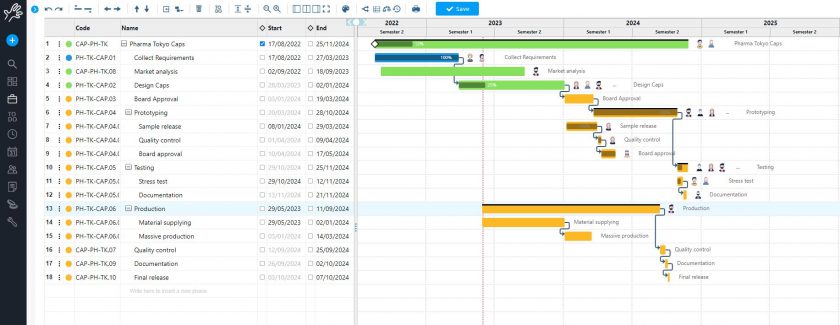
Centralization means eliminating the need to manually synchronize information from different systems. Every update instantly feeds into the overall plan, making email updates and weekly status meetings unnecessary.
This is what Gruppo Confezioni Andrea Italia did: they introduced Twproject, starting with their IT department, which was working on a strategic project to migrate the company’s servers to the cloud—a project that took almost a year and was managed entirely on the platform.
That was the starting point: having a single place where all the information was stored, accessible, and secure.
“Before using Twproject, we would spend a lot of time searching for things that others had created using different approaches, archived who knows where. Now everything is centralized in one place, and we never miss anything.”
— Alessio Valvano, Head of IT — Gruppo Confezioni Andrea Italia
Step 2 – Adopt a Methodology Suitable for Your Situation
There is no single universal methodology for IT projects. Waterfall works well for projects where requirements are stable and phases are sequential; Agile is best suited when requirements change frequently or when working in short sprints.
They unintentionally adopt a hybrid approach, combining different methodologies without a common framework. The result is that everyone works according to their own logic, making it impossible to compare actual progress with the plan.
For Confezioni Andrea, choosing a flexible tool allowed them to manage both structured processes—such as APQP (Advanced Product Quality Planning), a standard methodology in the automotive industry—and more operational day-to-day activities within the same environment. Effective project management software for IT teams must support this hybrid approach without forcing team members into a single, rigid framework.
Step 3 – Monitor Your Resources and Workloads in Real Time
One of the most common signs of fragmented management is the struggle to know who is doing what—and how busy they already are. When resource information is dispersed across spreadsheets, chat messages, and people’s memories, there is a real risk of overload or underutilization.
Real-time resource monitoring helps to:
• Balance the workload among team members
• Identify bottlenecks before they cause delays
• Plan new projects using real-time availability data
• Prevent employees from being assigned to too many critical tasks at the same time
At Confezioni Andrea Italia, insight into activities has been extended beyond the IT team: during the relocation of its operational headquarters, the company publicly shared updates on the work’s progress, giving all employees the means to monitor progress and provide feedback in real time.
This approach transformed the management of a complex project into a transparent, collaborative process.
🔗 Read the full case study – Learn how Gruppo Confezioni Andrea Italia centralized their IT project management with Twproject.
Step 4 – Integrate time and cost tracking
An IT project can meet deadlines but exceed its budget—or vice versa. This is often where fragmentation happens: project managers lack insight into actual costs, and those who monitor costs have no clear overview of task progress.
Integrating time tracking with cost management means being able to compare original estimates with real-time data, immediately identifying critical areas. The most effective project management techniques always include a measurement system that factors in both time and cost: this is the only way to make informed decisions during execution.
For a business like Confezioni Andrea, which has production facilities spread across multiple countries, this integration has also had a direct impact on operational production management, enabling the company to optimize the flow of information between Italy and Serbia.
Step 5 – Replace manual reports with automated dashboards
If project managers have to gather data from different sources every week to compile a progress report, it means the system isn’t working for them. This is one of the most glaring wastes in IT teams with fragmented management.
Automated dashboards solve this issue: information is always up-to-date and available at all levels without requiring manual processing. The best software di project management feature cutting-edge reporting capabilities that allow you to filter data by project, resource, time period, and performance metric.
For Confezioni Andrea, having user-friendly dashboards and comprehensive, always-accessible documentation also yielded an unexpected value: during IATF audits for quality certification, their team received a commendation specifically because of the traceability provided by Twproject—a benefit that extends far beyond day-to-day operations.
“We wanted to standardize and simplify processes, but most importantly, we wanted to provide a powerful tool for those who work on our projects every day.”
— Alessio Valvano, Head of IT — Gruppo Confezioni Andrea Italia
Results: from fragmentation to control
Following the adoption of Twproject, Confezioni Andrea Group achieved tangible and measurable results:
• Streamlined communication: fewer emails, greater clarity
• Greater control and traceability: every activity is documented and monitored
• Stress-free audit preparation: data is always accessible and up-to-date
• Gradual adoption across the entire company, beyond the IT department
It’s not just about choosing a tool, but about establishing a shared work process that combines company resources, ensuring control, transparency, and efficiency.
Fragmented IT project management is not an inevitable destiny. It is the result of choices made over time. And as Confezioni Andrea’s experience demonstrates, it can be overcome: with a systematic approach, step-by-step implementation, and the right tools.