Before giving the go-ahead to a project, an engineering firm must answer a question that is far from straightforward: Is this project truly sustainable, given the resources and timeframe we have available?
This is precisely what the feasibility study and risk analysis are for: to prevent a project from getting off the ground on shaky foundations, only to discover halfway through that the resource workload is unsustainable or that the timelines were unrealistic from the outset.
CONTENTS
- The risks of a ‘rough-and-ready’ feasibility study
- How to build a feasibility analysis that stands the test of time
- 1. Break the project down into traceable phases, not a single rough estimate
- 2. Check resource availability before saying ‘it can be done’
- 3. Don’t stop at the initial assessment: keep an eye on deviations
- The case of Euroricambi Group
- Let us show you how it’s done
The problem for those managing engineering projects is that this assessment is often carried out using tools that are not linked to one another and which lack an overall view: one platform for the budget, another system for resource allocation, and a series of emails to keep track of decisions. The result is that feasibility is assessed just once, at the start, and then nobody updates it as the project progresses and conditions change.
The risks of a ‘rough-and-ready’ feasibility study
Before discussing tools, it is worth focusing on where the problems actually arise. In most engineering firms, feasibility analysis faces a number of recurring challenges :
- duration estimates are based more on the project manager’s personal experience than on verifiable historical data;
- no one has a real insight into how much resources are already tied up on other ongoing projects, so the feasibility assessment is issued without any certainty;
- feasibility is assessed only once, during the quotation stage, and then nobody updates it as the context changes;
- risks only come to light once the project has already started, when the scope for course correction has been drastically reduced;
- the technical documentation supporting the decision (requirements, drawings, regulatory constraints) remains scattered across emails, shared folders and private messages, making it difficult to retrieve when it is actually needed.
The result is a feasibility study that looks sound on paper, but proves fragile at the first change in circumstances.
How to build a feasibility analysis that stands the test of time
Good industry practice involves treating feasibility as an ongoing process, rather than a stamp applied at the start of the project. Here are the key points on which to base it.
1. Break the project down into traceable phases, not a single rough estimate
The problem: without a clear structure of phases, sub-phases and dependencies, it is impossible to understand where the real risks lie; you end up assessing the project as a whole, losing sight of the individual bottlenecks.
How to manage it: an interactive Gantt chart such as the one from Twproject, one of the best project management tools for engineering allows you to break the project down into phases and sub-phases with their respective durations and dependencies, and to associate all the necessary technical documentation with each phase; in this way, those assessing feasibility always work with the correct information, without having to search for it elsewhere.
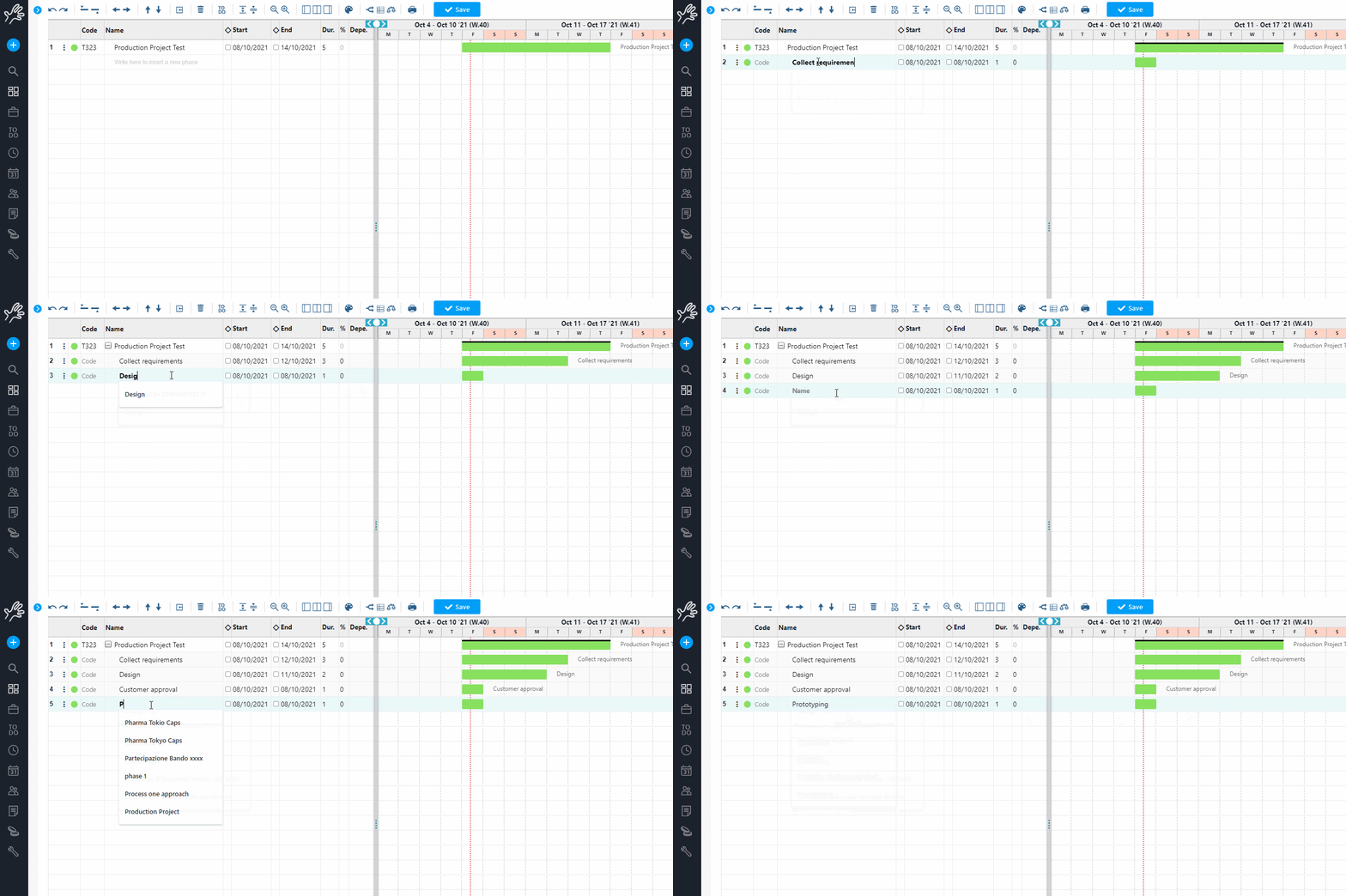
For each project phase in Twproject , you can assign:
- the people in charge, with their roles, workloads and assignments;
- the budget and the related ordinary and incidental expenses, with accompanying financial documentation;
- the individual tasks to be carried out (ToDo’s) to complete the phase;
- the technical documentation so that everything is always to hand.
2. Check resource availability before saying “it can be done”
The problem: approving a new project without knowing how much work the team already has on their hands is one of the most common mistakes; conflicts between projects only emerge later, when it is already too late to redistribute the work wisely.
How to manage it: Twproject calculates the resource utilisation level directly at the moment they are assigned to the project; this allows for an immediate assessment of whether the plan is sustainable with the current workforce, or whether it creates conflicts with activities that have already been planned. Those responsible for giving the go-ahead can immediately see where the risk of overload is concentrated, and can intervene by redistributing the work, rescheduling a phase, or revising the overall timeline.
All reallocation tasks can be carried out automatically by Twproject, which uses an intelligent algorithm to recalculate workloads or timelines to ensure the phase is sustainable.

3. Don’t stop at the initial assessment: keep an eye on deviations
The problem: plans change; a delayed phase, a member of staff falling ill, a supplier running late – these are all variables that call the initial feasibility into question, but rarely does anyone notice them in time.
How to manage this: Twproject automatically flags critical situations when a date is no longer consistent with the project calendar, when a milestone is at risk of being missed, or when a task is approaching its deadline without the preliminary work having been completed. These alerts allow you to identify bottlenecks whilst they are still manageable, rather than discovering them after the damage has been done.

This integration of planning, workload and continuous monitoring is what distinguishes a sound feasibility study from an optimistic estimate; and it is a topic that is inevitably linked to the management of project costs and the allocation of resources over time, two processes which, in an engineering firm, cannot be treated separately from the planning itself.
The case of Euroricambi Group
Euroricambi Group, an aftermarket spare parts company based in Italy, had for years been dealing with fragmented project management, relying on unshared tools, emails, phone calls and personal notes, without a clear overview of who was working on what. As the company’s IT technician explains:
Twproject has given us complete visibility over ongoing projects and assigned tasks. We can now easily monitor the progress of each project, assign tasks with greater precision and intervene promptly if something does not go as planned.

The Gantt feature, in particular, proved crucial for managing sequential tasks and assessing the sustainability of internal processes in advance, whilst centralised management helped to reduce conflicts over resources and ensure operational continuity even during the most challenging times.
Let us show you how it’s done
Simply knowing that a tool exists is not enough; you need to understand how to apply it to your specific workflow, with its own stages, roles and critical issues.
That’s why Twproject provides a dedicated tutor, an expert in the engineering sector, who will show you step by step how to set up feasibility analysis and risk management for your first real-world project. Request a demo and find out first-hand how it works.