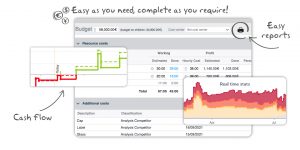

Budgeting and management control are two key tools for any project manager who wants to manage project costs, resources, and timelines without losing track of how the work is actually progressing.
A project that overshoots its budget is not just an accounting problem. It’s a indication that something went wrong: an overly optimistic estimate, an unmanaged risk, an unformalized change, or, more often than not, a lack of ongoing monitoring during execution.
Despite this, in many companies, budgets are still regarded as documents to be drafted at the start of a project and revisited only during the final reporting phase. This approach can lead to significant costs, both financially and in terms of professional credibility.
For a project manager, management control is not a task to be left entirely to the CFO or the controller. It is a strategic skill, because it helps connect the project’s operational management to the company’s financial goals. It involves knowing where resources are allocated, which activities are consuming more effort than expected, where variances are occurring, and what decisions to make before waste becomes systemic.
CONTENT
A budget is a navigation tool
The line that separates them may seem blurret, but the difference is substantial. A properly planned budget is not just the sum of projected costs. It is a roadmap that associates each expense item with a project phase, a resource, an activity, and a deliverable.
Without this level of detail, financial oversight becomes ineffective. The project manager sees the total cost but cannot pinpoint where the problem is actually occurring.
In practice, many projects are still planned with overly aggregated budgets: one figure for internal resources, one for vendors, one for licenses, and one for any external costs. The problem arises when variances occur. If the budget is not linked to the project structure, it becomes difficult to take targeted action.
A more robust approach involves building the budget starting from the Work Breakdown Structure. Each work package should include a cost estimate, an estimated effort, assigned resources, and a link to actual progress. Doing so, you’ll get a more accurate financial snapshot with every project update.
For a project manager, this step is crucial: the budget isn’t just for getting the project approved—it’s for staying on track.
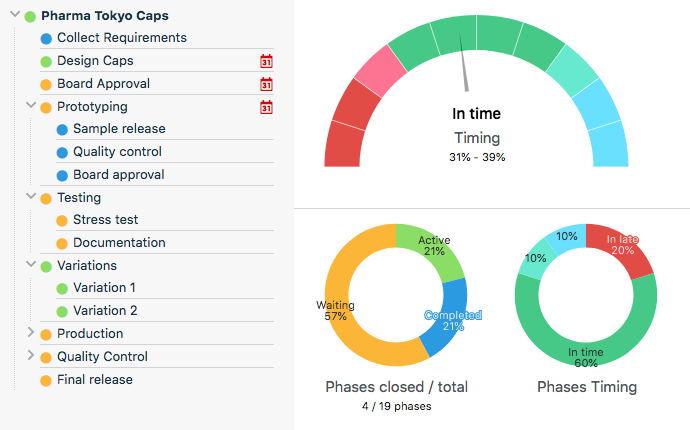
Where does waste in projects stem from?
Waste hardly ever shows up out of the blue. It usually creeps in quietly, through small deviations that, if left unchecked, end up chewing away at margins, timelines, and quality.
One of the most common pitfalls is unchecked scope creep. Every change request, even when it seems small or reasonable, impacts schedules, costs, and priorities. The problem isn’t accepting changes, but rather absorbing them without assessing them. Every change request should also be analyzed from a financial perspective before being approved.
Another source of waste comes from underestimating resource costs. Planning often revolves around people’s expected availability, ignoring factors like meetings, interruptions, handoffs, learning curves, and unforeseen tasks. Estimates should instead be based not only on experience but also on historical data from previous projects.
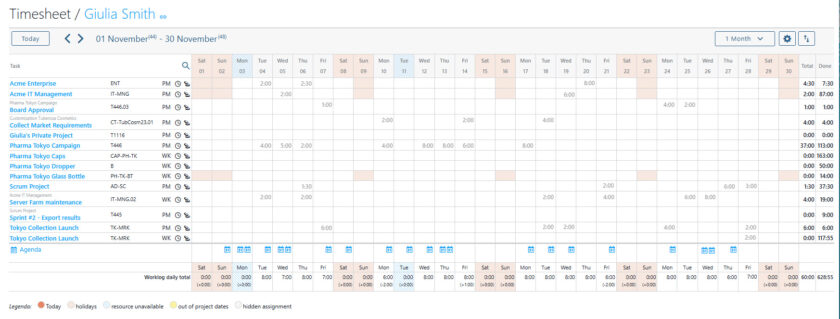
Then there’s the whole issue of untracked time. If hours worked aren’t reliably tracked, it becomes virtually impossible to truly determine how much a project phase costs. And with no solid actual data, the forecast loses its value as well.
Lastly, there is decision-making waste: fragmented information, outdated reports, and meetings based on perceptions rather than data. When project managers lack a clear picture, decisions are made late. When it comes to complex projects, making decisions late almost always means spending more.
Budgeting and management control: key performance indicators to monitor
To ensure effective management control, simply checking whether the total budget has been observed is not enough. You need to monitor the project’s financial performance throughout its entire lifecycle.
Project managers should track the ratio of estimated hours to actual hours worked, compare planned costs with actual costs, assess task progress relative to budget consumption, monitor resource utilization, and evaluate the projected margin at the end of the project.
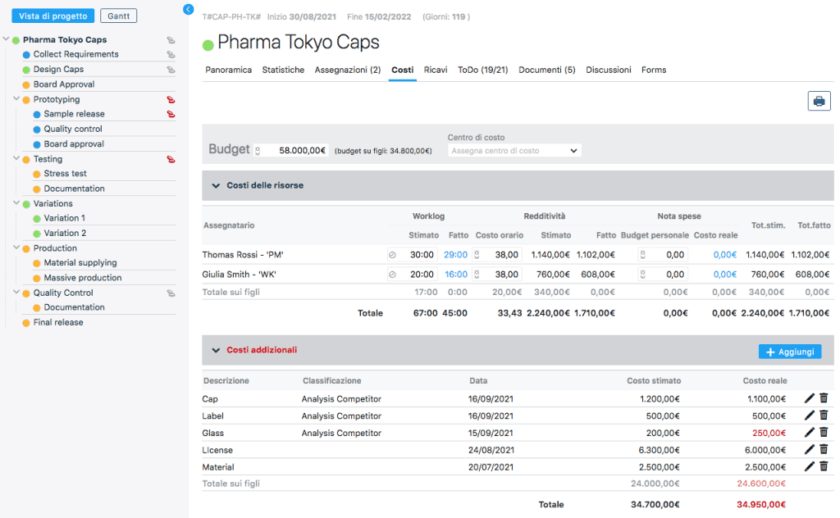
A very helpful metric is the Earned Value Management. EVM compares the work actually completed with incurred costs and the planned budget. By doing this, project managers can not only see how much has been spent but also whether that spending aligns with the value delivered.
For example, a Cost Performance Index below 1 means that the project is costing more than the value generated by the work completed. This isn’t just a figure to note: it’s a red flag that requires corrective action. The value of management control lies precisely here: in transforming financial data into operational decisions.
The monitoring routine that makes all the difference
Successful management control does not solely depend on the tools used. It requires discipline in its application.
Waiting for the monthly report may be too late, particularly in highly complex projects or those with narrow margins. A well-established control routine should include frequent checks, proportionate to the project’s criticality.
On a weekly basis, project managers should review hours worked, check the progress of critical activities, and compare incurred costs with the budget allocated for the current phases.
On a monthly basis, they should review the most significant deviations, update completion estimates and revise the project’s financial forecast.
When milestones are reached, however, it is beneficial to conduct a more comprehensive review: financial status, remaining effort, open risks, change requests, projected margin, and the sustainability of the next step.
A good rule of thumb is not to underestimate variances that exceed 10% of the step budget. When a variance crosses this threshold, you should immediately analyze the causes and inform stakeholders, rather than waiting for the problem to escalate.
Centralizing financial data: Twproject’s strategic value
Offline spreadsheets, timesheets filled out from what’s remembered at the end of the month, and financial data disconnected from project management software are the biggest drivers of waste in a company.
To implement predictive control, you need a platform capable of centralizing the flow of information. Twproject resolves data fragmentation by natively integrating:
- WBS-based planning and cost tracking: to assign specific budgets to each project and sub-project level.
- Advanced timesheets: directly linked to tasks, to calculate the actual cost of work in real time based on specific resource rates.
- Cost monitoring: to track expense reports, suppliers, and material purchases for individual orders.
- Real-time financial dashboards: to get an instantaneous snapshot of the variance between budget and actual costs and calculate projected final expenses.
Cutting waste doesn’t automatically mean making across-the-board cost cuts. It involves understanding where value is created, where resources are being wasted, and where to intervene before variances get out of hand.
Budgeting and management control help project managers steer the project with greater awareness, protect margins, and improve the quality of decisions.
Those who manage the budget manage the project. Those who let the budget manage itself will, sooner or later, be held responsible for the variances.
With Twproject, cost control becomes integral to day-to-day management: not a task to be done at the end of the project, but a concrete tool for reducing waste, improving planning, and delivering more solid results to the company.